


Deep Infiltrating Endometriosis Specialist Lebanon: Relief

Deep Infiltrating Endometriosis Specialist Lebanon | Dr. Alain Daher Endometriosis is often described as a “hidden” disease, but for those suffering from its most severe form, the impact is impossible to ignore. Deep Infiltrating Endometriosis (DIE) represents the most aggressive stage of the condition, where endometrial-like tissue penetrates more than five millimeters beneath the peritoneal surface, often invading the muscular walls of pelvic organs. For women in the Middle East seeking answers, finding a Deep Infiltrating Endometriosis Specialist Lebanon is the first step toward reclaiming a life free from systemic pain. Navigating the complexities of DIE requires more than just general gynecological knowledge; it demands a surgeon who specializes in the “radical” yet “conservative” excision of diseased tissue. Dr. Alain Daher, with his extensive international training and focus on minimally invasive techniques, has established himself as a leading Deep Infiltrating Endometriosis Specialist Lebanon. His approach balances the thorough removal of lesions with the preservation of organ function and fertility, ensuring that patients receive world-class care right here in Beirut. This guide provides a comprehensive look at the diagnosis, the surgical challenges, and the path to recovery for those dealing with deep-seated disease. Understanding the Complexity of DIE Deep Infiltrating Endometriosis is not merely “bad cramps.” It is a multi-system disease that can involve the bowel, bladder, ureters, and even the nerves of the pelvic floor. Because of this, the Diagnosis of deep infiltrating endometriosis Beirut can be a long and frustrating journey. Many women are misdiagnosed for years with irritable bowel syndrome (IBS) or chronic urinary tract infections before the true culprit is identified. An Advanced laparoscopic surgeon Beirut endometriosis expert understands that DIE requires a different diagnostic lens. While standard ultrasounds often miss superficial implants, specialized “mapping” techniques such as deep endometriosis-specific transvaginal ultrasound or MRI are essential. A precise Diagnosis of deep infiltrating endometriosis Beirut allows the surgical team to plan for the involvement of other organs, ensuring that the patient is fully prepared for the complexity of the procedure. For many women, the Chronic pelvic pain relief for severe endo they have sought through hormones or painkillers has been insufficient. This is because these medications only suppress the symptoms of superficial disease; they cannot penetrate the thick, fibrotic nodules characteristic of DIE. To achieve true Chronic pelvic pain relief for severe endo, surgical excision of the infiltrating nodules is the only definitive option. Recognizing the Symptoms of Stage 4 Endometriosis Surgery Endometriosis is staged from I to IV, with Stage IV representing the most extensive disease, often involving deep infiltration and significant scar tissue. Understanding the Symptoms of stage 4 endometriosis surgery is vital for determining the urgency of intervention. Functional Impacts on Pelvic Organs The Symptoms of stage 4 endometriosis surgery often extend beyond the menstrual cycle. Patients may experience: Severe pain during bowel movements (dyschezia). Cyclical urinary symptoms, such as urgency or pain. Deep dyspareunia (pain during intercourse) that feels “internal.” Chronic, non-cyclical pelvic pain that radiates to the legs or lower back. When these Symptoms of stage 4 endometriosis surgery are present, it often indicates that the disease has progressed to the point of organ involvement. For such patients, Chronic pelvic pain relief for severe endo is not just a goal; it is a necessity for maintaining long-term health. Dr. Alain Daher emphasizes that waiting too long to address these symptoms can lead to irreversible organ damage, such as kidney dysfunction or bowel obstruction. Surgical Excellence: Bowel and Bladder Endometriosis Surgical Excision The hallmark of a true Deep Infiltrating Endometriosis Specialist Lebanon is the ability to perform Bowel and bladder endometriosis surgical excision safely. When the disease penetrates the intestinal wall or the bladder muscle, a standard gynecologist may not be equipped to handle the repair. Targeting the Digestive and Urinary Tract Bowel and bladder endometriosis surgical excision can take several forms. For the bowel, this may involve “shaving” the lesion off the surface, a “discoid resection” (removing a small circle of the bowel wall), or a “segmental resection” (removing a section of the bowel and reconnecting it). Similarly, Bowel and bladder endometriosis surgical excision for the bladder requires the careful removal of the nodule while protecting the delicate lining of the organ. This is Specialized gynecologic surgery for severe endometriosis at its most complex. It requires a surgeon who is comfortable operating in “no-man’s land” the spaces between the major organs where the disease likes to hide. Dr. Alain Daher utilizes his background in oncological and minimally invasive surgery to ensure that Specialized gynecologic surgery for severe endometriosis is performed with the highest safety standards, aiming for a radical cure while avoiding the need for permanent stomas or urinary catheters. Advanced Techniques: Ureterolysis and Nodule Removal One of the most dangerous aspects of DIE is its tendency to involve the ureters the tubes that carry urine from the kidneys to the bladder. If these tubes are compressed by endometriosis or scar tissue, it can lead to “silent” kidney failure. This makes Ureterolysis for endometriosis treatment Lebanon a critical component of the surgical plan. Protecting Vital Structures Ureterolysis for endometriosis treatment Lebanon involves the delicate process of freeing the ureter from surrounding adhesions. It requires the steady hand of an Advanced laparoscopic surgeon Beirut endometriosis specialist who can navigate the retroperitoneal space. By performing Ureterolysis for endometriosis treatment Lebanon, the surgeon restores the flow of urine and prevents long-term renal complications. Similarly, Endometriosis nodule removal from pelvic organs must be handled with extreme care. These nodules are often “rock-hard” and tethered to major nerves or blood vessels. Endometriosis nodule removal from pelvic organs requires meticulous dissection to ensure the disease is completely gone without causing nerve damage. Whether it is the uterosacral ligaments or the vagina, Endometriosis nodule removal from pelvic organs is a primary focus for Dr. Alain Daher, as these nodules are the main drivers of deep pelvic pain. Managing Severe Pelvic Adhesions Through Surgery In Stage IV disease, the pelvis is often “frozen,” meaning the uterus, ovaries, and bowel are
Endometriosis Surgery and Fertility: Proven Success

Endometriosis Surgery and Fertility: 5 Keys to Success For many women, the diagnosis of endometriosis is not just a source of chronic pain, but a significant psychological burden regarding their future as mothers. It is estimated that up to 50% of women with infertility also suffer from this condition. Therefore, understanding the delicate link between Endometriosis Surgery and Fertility is the most important step for any patient hoping to conceive. In Lebanon, patients are increasingly seeking advanced solutions that do not force them to choose between pain relief and reproductive health. Dr. Alain Daher, a specialist with international credentials in both fertility and minimally invasive surgery, has pioneered a “fertility-first” surgical philosophy. By focusing on Fertility Sparing Endometriosis Surgery Lebanon, Dr. Daher ensures that the goal of every procedure is not just the removal of disease, but the restoration of the body’s natural potential to create life. This comprehensive guide explores the 5 keys to achieving your dream of motherhood while managing a complex diagnosis through the lens of modern science and surgical excellence. Key 1: Unmasking the Silent Barrier One of the most frustrating aspects of reproductive health is the “unexplained” diagnosis. Many couples spend years undergoing basic fertility treatments without success, unaware that a hidden condition is sabotaging their efforts. This is the realm of Silent Endometriosis and Unexplained Infertility. The Hidden Impact on Conception Endometriosis doesn’t always cause debilitating pain. For some women, the only symptom is the inability to get pregnant. In cases of Silent Endometriosis and Unexplained Infertility, the disease creates a “toxic” inflammatory environment in the pelvis that can damage egg quality, interfere with the movement of the fallopian tubes, and prevent an embryo from implanting in the uterus. When you work with an Infertility Specialist Beirut Endometriosis Care professional like Dr. Alain Daher, the diagnostic process is thorough. If a patient presents with Silent Endometriosis and Unexplained Infertility, a diagnostic laparoscopy may be the key to unlocking the mystery. Identifying and removing these silent lesions is often the catalyst that turns years of failure into a positive pregnancy test. Key 2: The Gold Standard of Surgical Technique The success of your reproductive journey depends entirely on how the surgery is performed. When discussing Endometriosis Surgery and Fertility, the technique used to remove the disease is the primary predictor of future pregnancy success. Natural Conception After Laparoscopic Excision There are two main ways to handle endometriosis: ablation (burning the surface) or excision (cutting it out from the root). For patients hoping for Natural Conception After Laparoscopic Excision, the choice must be excision. Burning the surface often leaves active disease underneath, which continues to produce inflammatory chemicals that prevent pregnancy. By choosing Fertility Sparing Endometriosis Surgery Lebanon, you are ensuring that the surgeon uses high-definition cameras to identify and excise every speck of the disease. Natural Conception After Laparoscopic Excision is significantly more likely when the pelvic environment is fully cleared of inflammatory tissue. This restorative approach is a cornerstone of the care provided by Dr. Alain Daher, who utilizes his French surgical training to ensure the highest degree of precision. Furthermore, for women who have suffered from tubal factors, Laparoscopic Surgery for Blocked Fallopian Tubes can often be performed in the same session. By clearing adhesions and performing Laparoscopic Surgery for Blocked Fallopian Tubes, the surgeon restores the mechanical pathway necessary for the egg and sperm to meet. Key 3: Protecting the Ovarian Reserve Perhaps the most sensitive area of Endometriosis Surgery and Fertility involves the ovaries. When endometriosis forms a cyst on the ovary (an endometrioma), the surgical approach must be extremely delicate. Endometrioma Removal and Ovarian Reserve The “ovarian reserve” refers to the quantity and quality of a woman’s eggs. A poorly performed surgery can accidentally remove healthy ovarian tissue, leading to a permanent drop in fertility. This is why the conversation regarding Endometrioma Removal and Ovarian Reserve must be a priority during your pre-operative consultation. Instead of simply draining the cyst or burning the cyst wall, an Infertility Specialist Beirut Endometriosis Care expert will use a technique called “stripping” to carefully peel the cyst wall away. This Ovarian Cystectomy and Fertility Protection method ensures that the disease is removed while the precious eggs are left unharmed. The goal of Ovarian Cystectomy and Fertility Protection is to stop the cyst from recurring while maintaining the highest possible egg count. Dr. Alain Daher emphasizes that Endometrioma Removal and Ovarian Reserve are not mutually exclusive; with the right surgical finesse, you can achieve both disease clearance and fertility preservation. Protecting the ovaries through meticulous Ovarian Cystectomy and Fertility Protection is what separates a generalist from a true sub-specialist. Key 4: Preparing for Advanced Reproduction (IVF) In many cases, surgery is not the “end” of the fertility journey, but a necessary preparation for assisted reproductive technologies. Understanding the Surgical Management of Endometriosis for IVF is vital for patients with Stage III or IV disease. Optimizing IVF Success Rates After Endometriosis Surgery Research has shown that the presence of active endometriosis, especially large endometriomas, can negatively impact the success of an IVF cycle. This is where the Surgical Management of Endometriosis for IVF comes into play. By removing large cysts and cleaning the pelvic cavity, the surgeon makes it easier for the fertility specialist to retrieve eggs and improves the uterine environment for embryo transfer. The IVF Success Rates After Endometriosis Surgery are notably higher than in patients who attempt IVF with untreated disease. For patients with complex, deep-seated lesions, Pregnancy Outcomes After Deep Infiltrating Endometriosis Surgery are also greatly improved when the disease is excised before starting an IVF protocol. Dr. Alain Daher provides an integrated approach to Surgical Management of Endometriosis for IVF, ensuring that the timing of the surgery and the subsequent stimulation cycle are perfectly synchronized. This synergy is the reason why IVF Success Rates After Endometriosis Surgery at leading clinics in Lebanon are among the best in the region. Whether you are dealing with superficial implants or looking for improved
Fetal Monitoring Lebanon: Essential Steps for Safety

Fetal Monitoring Lebanon: 7 Essential Steps to Ensure Safety The nine-month journey of pregnancy is one of profound anticipation and immense responsibility. For expectant parents in the region, ensuring the optimal health and safety of both mother and baby is paramount. In this complex and vital phase of women’s health, the quality of care specifically the vigilance and technology dedicated to Fetal Monitoring Lebanon makes all the difference. World-class care in Obstetrics is no longer exclusive to major international capitals; leading experts like Dr Alain Daher bring globally recognized standards and specialized knowledge right here. As a highly trained Obstetrics Specialist, Dr. Daher understands that comprehensive pregnancy monitoring is a continuous process, demanding constant attention to detail and immediate access to advanced diagnostic tools. This guide outlines the 7 essential steps in modern Fetal Monitoring Lebanon, detailing the protocols and specialized interventions necessary to safeguard every pregnancy, especially those categorized as high-risk. From the earliest weeks of conception to the final moments of Preparing for Birth Lebanon, this structured approach ensures a clear, safe, and positive outcome. Step 1: Early Pregnancy Monitoring and Establishing a Baseline The first trimester sets the foundation for the entire pregnancy, making Early Pregnancy Monitoring the most critical step in the journey. The initial weeks are a time of rapid cellular development, and precise surveillance is vital for confirming viability and establishing accurate gestational dating. Early Pregnancy Monitoring typically begins with a detailed medical history review, including any past complications. For many, this initial phase requires a reassuring expert presence, especially if there is a history of loss. This is where a Recurrent Miscarriage Specialist becomes indispensable. If a patient has experienced three or more consecutive pregnancy losses, a specialist is needed to conduct targeted diagnostic investigations, such as hormonal profiling, genetic screening, and structural uterine assessment. The goal of Early Pregnancy Monitoring is to detect potential issues before they become life-threatening complications. Dr Alain Daher emphasizes a proactive approach during this foundational stage. Early confirmation of heartbeat and proper implantation through highly sensitive transvaginal ultrasound is the first element of Fetal Monitoring Lebanon. Establishing this baseline, combined with thorough maternal bloodwork, ensures that potential risks whether due to maternal health conditions or historical issues are identified immediately. This diligent Early Pregnancy Monitoring is fundamental to the entire process of successful Obstetrics. Step 2: The Role of Advanced Prenatal Screenings Modern Obstetrics has revolutionized the ability to assess fetal health and genetic risks non-invasively, providing answers earlier than ever before. This is accomplished through Advanced Prenatal Screenings. The primary tool in this revolution is the Non Invasive Prenatal Testing (NIPT) Lebanon. This simple maternal blood test can be performed as early as the tenth week of pregnancy and screens for common chromosomal abnormalities, such as Down syndrome, Edwards syndrome, and Patau syndrome, with remarkable accuracy. The availability of Non Invasive Prenatal Testing (NIPT) Lebanon has significantly reduced the need for more invasive diagnostic procedures. The precision offered by Non Invasive Prenatal Testing (NIPT) Lebanon gives parents crucial information early in the pregnancy journey. Beyond NIPT, Advanced Prenatal Screenings also include first-trimester screening (nuchal translucency scan and serum markers) and second-trimester multiple marker screening. For patients with a family history of specific genetic conditions, Genetic Counseling Pregnancy Lebanon becomes an integral part of this step. The role of Genetic Counseling Pregnancy Lebanon is not to make decisions for the parents, but to clearly interpret the results of these sensitive screens and provide unbiased, comprehensive information about potential fetal risks and subsequent diagnostic options. Every element of Fetal Monitoring Lebanon relies on the precise integration of these screenings. By combining initial bloodwork, the Genetic Counseling Pregnancy Lebanon process, and advanced lab results, the Obstetrics Specialist can create a highly personalized risk profile, moving forward confidently with targeted monitoring. Advanced Prenatal Screenings are a cornerstone of modern Prenatal Care Beirut. Step 3: Comprehensive Ultrasound Mapping While screenings offer genetic insights, ultrasound provides the critical visual blueprint for fetal growth and anatomical development. This step centers around the Detailed Pregnancy Ultrasound Beirut. The second trimester (around 18-22 weeks) is the ideal window for the anomaly scan, also known as the morphology scan. This is far more than a simple check; it is a meticulous, head-to-toe structural examination. A Detailed Pregnancy Ultrasound Beirut assesses every major organ system from the four chambers of the heart to the integrity of the spine, kidneys, and brain structure to rule out structural malformations. The accuracy of the Detailed Pregnancy Ultrasound Beirut depends entirely on the technology used and the skill of the Obstetrics Specialist interpreting the images. Dr Alain Daher, an experienced Obstetrics Specialist known for his meticulous approach, ensures that every patient receives a comprehensive structural assessment. Furthermore, the practice utilizes specialized technology, making 3D Ultrasound Pregnancy Lebanon available for enhanced visualization. While not always necessary for diagnosis, 3D Ultrasound Pregnancy Lebanon can provide invaluable clarity on facial and limb structures, offering parents a deeply reassuring and emotionally connecting experience, especially when dealing with known structural anomalies. The utility of 3D Ultrasound Pregnancy Lebanon often extends beyond aesthetics to confirm subtle structural details. In the later stages, the Detailed Pregnancy Ultrasound Beirut is used to monitor placental function, amniotic fluid volume, and fetal position. Regular ultrasound checks are an absolute necessity in Prenatal Care Beirut, forming a pillar of reliable Fetal Monitoring Lebanon and confirming the ongoing anatomical well-being that defines safe Obstetrics. Step 4: Specializing in High-Risk Pregnancy While the majority of pregnancies are low-risk, approximately 6% to 8% are classified as high-risk, requiring specialized management. This demands the focused expertise of a High Risk Pregnancy Specialist Beirut. A pregnancy may be deemed high-risk due to pre-existing maternal conditions (such as diabetes, hypertension, autoimmune disorders, or advanced maternal age), or due to complications arising during pregnancy (such as pre-eclampsia, placenta previa, or fetal growth restriction). Navigating these challenges successfully requires a dedicated High Risk Pregnancy Specialist Beirut and the resources of Maternal Fetal Medicine Lebanon. Maternal Fetal Medicine Lebanon is
Alain Daher – Best Gynecologist in Lebanon
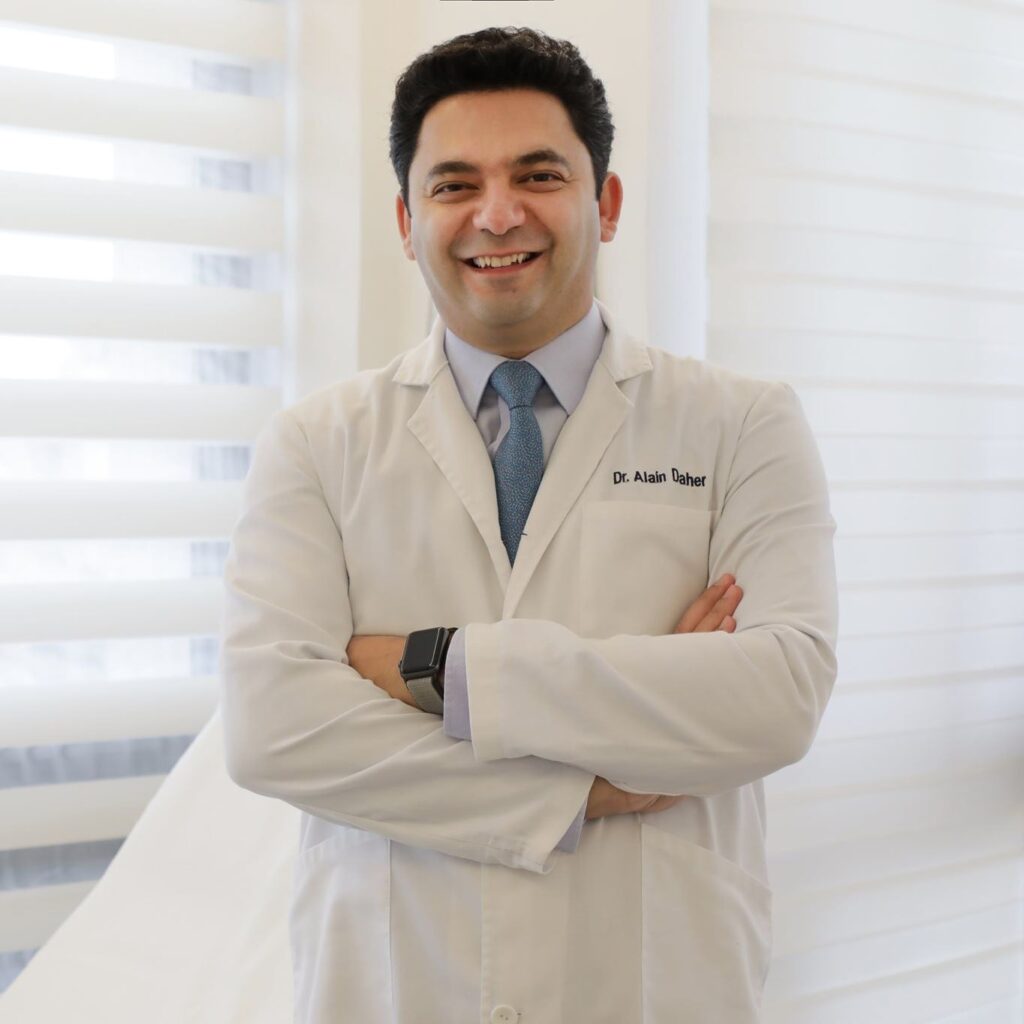
Alain Daher – Best Gynecologist in Lebanon Alain Daher is a distinguished gynecologist in Lebanon, renowned for his dedication to women’s health and comprehensive care. With extensive experience and specialized training, Dr. Daher has built a reputation for excellence in obstetrics, gynecology, and infertility (ivf), offering a range of services tailored to his patients’ unique needs. Education and credentials Dr Alain Daher is an Obstetrician and Gynecologist, specialized in obstetrics, minimally invasive gynecologic surgery, breast surgery and medically assisted procreation. He achieved his obstetrics and gynecology specialty in Beirut, at Hotel Dieu de France hospital, which is affiliated to the St Joseph University of Beirut(2010). He then has done a fellowship during four years in the division of obstetrics and gynecology at the faculty of medicine Paris Descartes (Paris – France). Meanwhile, Dr Daher has worked in breast and gynecologic oncology and pelvic surgery at Curie institute, in laparoscopic gynecologic surgery at Pontoise Hospital and in minimally invasive surgery (Robotic and laparoscopic gynecologic surgery) at Diaconesses Hospital. He has also accomplished his obstetrics specialty at Pitié Salpétrière Hospital and at Cochin Port Royal Hospital in the department of medically assisted procreation. During his fellowship in France, he received many diplomas from several universities among which: a diploma in Breast Pathology from university of Versailles Saint-Quentin-en-Yvelines (Paris – FRANCE), a diploma in Robotic Surgery from School of Surgery (Nancy – FRANCE) and a diploma in Exploration and Practical Handling of Infertility from the faculty of medicine Paris Descartes (Paris – France). Dr Daher is certified as Excellent Psychomotor and Suturing Skills in Laparoscopy by the Academy Certification Program of the European Academy of Gynecological Surgery. He is a member and rater at the French Fetal Ultrasound College and a member of the Lebanese Society of Obstetrics and Gynecology (LSOG). On the academic side, Dr Daher has a diploma in Medical teaching from Pierre and Marie Curie university (Paris VI) and is a lecturer in the medical school at Saint Joseph university in Beirut from 2014. His private clinic is located in Achrafieh -facing Hotel Dieu de France Hospital – near Saint Joseph Laboratory. He practices in different centers including Bellevue Medical Center, Hotel Dieu de France hospital, Mount Lebanon Hospital (including the IVF lab), and Saint Joseph IVF lab. Areas of Expertise Dr. Alain Daher and his dedicated team are highly specialized in a comprehensive array of advanced gynecological services, offering cutting-edge treatments and compassionate care. His key areas of expertise include: Egg Freezing: Providing advanced options for fertility preservation, allowing women to secure their reproductive future. IVF Specialist: Expertly guiding patients through In Vitro Fertilization (IVF) treatments, including Intra Uterine Insemination (IUI) and Intra Cytoplasmic Sperm Injection (ICSI), to help achieve successful pregnancies. Minimally Invasive Surgery: A leader in advanced laparoscopic and robotic surgical techniques, ensuring quicker recovery times, reduced discomfort, and minimal scarring for various gynecological procedures. Urogynecology: Specializing in the diagnosis and treatment of pelvic floor disorders, bladder control issues, and other complex conditions affecting women’s pelvic health. Breast Surgery: Offering comprehensive care for various breast conditions, including advanced techniques for breast cancer diagnosis and surgical treatment. Dr. Daher’s commitment to excellence in these specialized fields ensures that his patients receive the highest standard of care, utilizing the latest medical advancements and personalized treatment plans. Patient-Centered Approach A hallmark of Dr. Daher’s practice is his patient-centered approach. He prioritizes building strong relationships with his patients, ensuring they feel comfortable and well-informed throughout their healthcare journey. Dr. Daher takes the time to listen to patients’ concerns, answer their questions, and develop personalized treatment plans tailored to their specific health needs. Commitment to Advancements in Gynecology Dr. Alain Daher is dedicated not only to providing excellent patient care but also to staying abreast of the latest advancements in gynecology. He regularly attends medical conferences and workshops, ensuring that he incorporates the most current practices and technologies into his practice. This commitment to ongoing education enables him to offer the best possible care to his patients. Patient Testimonials Patients consistently praise Dr. Daher for his professionalism, compassion, and expertise. Many have shared positive experiences, highlighting his thoroughness during consultations and his ability to make them feel at ease. These testimonials reflect the high level of trust that patients place in Dr. Daher’s care. Dr. Alain Daher is a leading gynecologist in Lebanon, renowned for his dedication to women’s health. His extensive training, patient-centered approach, and commitment to advancements in gynecology make him a highly sought-after specialist. Whether you require routine gynecological care or specialized treatment, Dr. Daher’s practice provides a welcoming and supportive environment where you can receive the highest quality of care. Contact him here.
