 Skip to main content




Egg Freezing vs Embryo Freezing: Which Is Right for You?

By Dr. Alain J. Daher — French-trained Obstetrician–Gynaecologist and Fertility Specialist, specialist in IVF and infertility, minimally invasive gynaecologic surgery, breast surgery and urogynaecology. Practising in Achrafieh, Beirut, with care at Bellevue Medical Center, Lebanon. Academic affiliation: Saint Joseph University (USJ) School of Medicine. Medical disclaimer: This article is for informational purposes only and does not constitute medical advice. It does not establish a doctor–patient relationship. Only a clinical assessment can determine which form of fertility preservation suits your situation. Please consult a qualified fertility specialist for evaluation and treatment recommendations. Introduction Once a woman has decided to preserve her fertility, a second question arrives quickly, and it is the one that causes the most hesitation in my consulting room: should you freeze eggs, or should you freeze embryos? It sounds like a technical question for the laboratory. It is not. The two routes begin identically and diverge in ways that are partly medical and partly personal — who needs to be involved, who gets to decide later, and how much you want to know while your material sits in storage. Both are established, both use the same freezing technology, and neither is universally better. This guide explains what actually separates them, what the evidence says about success, and how the decision tends to fall for different patients. If you are still at an earlier stage, start with the egg freezing overview or with egg freezing success rates by age, then come back to this comparison. The Shared First Half: Stimulation and Retrieval Whichever route you choose, the first half of the treatment is the same. You undergo a fertility evaluation — typically an AMH blood test, an antral follicle count on ultrasound, and baseline bloodwork — to estimate your ovarian reserve and confirm you are a candidate. You then take injectable hormones for roughly ten to twelve days to stimulate the ovaries to mature multiple eggs instead of the single egg of a natural cycle, with monitoring scans along the way. The eggs are then collected in a short procedure under sedation, usually fifteen to twenty minutes, using ultrasound-guided needle aspiration through the vaginal wall. Most women go home the same day. The medications, the monitoring, the retrieval, the costs of that phase, and the side effects — including the small risk of ovarian hyperstimulation syndrome, covered in more detail in my article on the side effects of ovarian stimulation — are identical for both options. Practical preparation is the same too, and is set out in how to prepare for egg freezing. The divergence happens a few hours later, in the laboratory. That is the entire decision. What Egg Freezing Is In egg freezing — oocyte cryopreservation — the mature eggs collected at retrieval are frozen as they are, unfertilised. No sperm is involved at any point. Freezing uses vitrification, an ultra-rapid cooling technique that turns the fluid inside the cell to a glass-like state rather than allowing damaging ice crystals to form. This matters: the egg is a large, water-rich cell and was historically difficult to freeze well. Vitrification is the reason elective egg freezing became a realistic option at all, and it clearly outperforms the older slow-cooling method it replaced. Your eggs then wait in storage. When you are ready, they are thawed, fertilised with sperm — a partner’s or a donor’s, chosen at that point, not today — cultured into embryos, and transferred. The full sequence is described in the stages of IVF. What Embryo Freezing Is In embryo freezing, the eggs are fertilised with sperm within hours of retrieval, usually by ICSI, where a single sperm is injected directly into each egg. The resulting embryos are cultured in the laboratory for five to six days until they reach the blastocyst stage, and those that develop normally are vitrified and stored. This is the long-established route, used in IVF in Lebanon and worldwide for decades, because freezing surplus embryos has always been part of IVF. It requires sperm on the day of retrieval, which means a partner or a donor must be decided upon before you start. The Key Differences at a Glance Egg freezing Embryo freezing What is stored Unfertilised mature eggs Fertilised eggs grown to blastocysts Sperm needed now No Yes — partner or donor Who it typically suits Single women; women not ready to fix the genetic father; medical preservation Couples in a stable relationship; patients already undergoing IVF Choice of genetic father later Retained Fixed at the time of freezing Consent to use later Yours alone Normally requires both parties’ continuing consent Genetic testing before storage Not possible Possible (PGT) Survival of the thaw Roughly 80–90% of eggs Over 95% of blastocysts What you know while in storage The number of eggs only Fertilisation and development already confirmed Steps needed later Thaw, fertilise, culture, transfer Thaw and transfer Survival ranges are drawn from published ASRM guidance and vary with laboratory and patient factors. Your own figures should come from the unit that would treat you. What the Evidence Actually Says Surviving the thaw Embryos tolerate freezing and thawing better than eggs. Vitrified blastocysts survive at rates above 95%, approaching 100% in good laboratories, while vitrified eggs survive at roughly 80 to 90%. That gap is real, and it is the strongest purely biological argument for embryos. Why ten eggs is not ten embryos The more important point is attrition. Each frozen egg must clear three hurdles that a frozen embryo has already cleared: it must survive the thaw, it must fertilise, and the resulting embryo must develop to a transferable stage. Losses at every step compound. Ten frozen eggs may yield perhaps eight surviving the thaw, six fertilising, and three or four reaching blastocyst — and only then do you reach the stage an embryo was already at on the day it went into storage. The American Society for Reproductive Medicine puts it bluntly at the level of the individual egg: the chance that one frozen egg will eventually yield
How to Prepare for Egg Freezing: A Complete Guide for Women in Lebanon
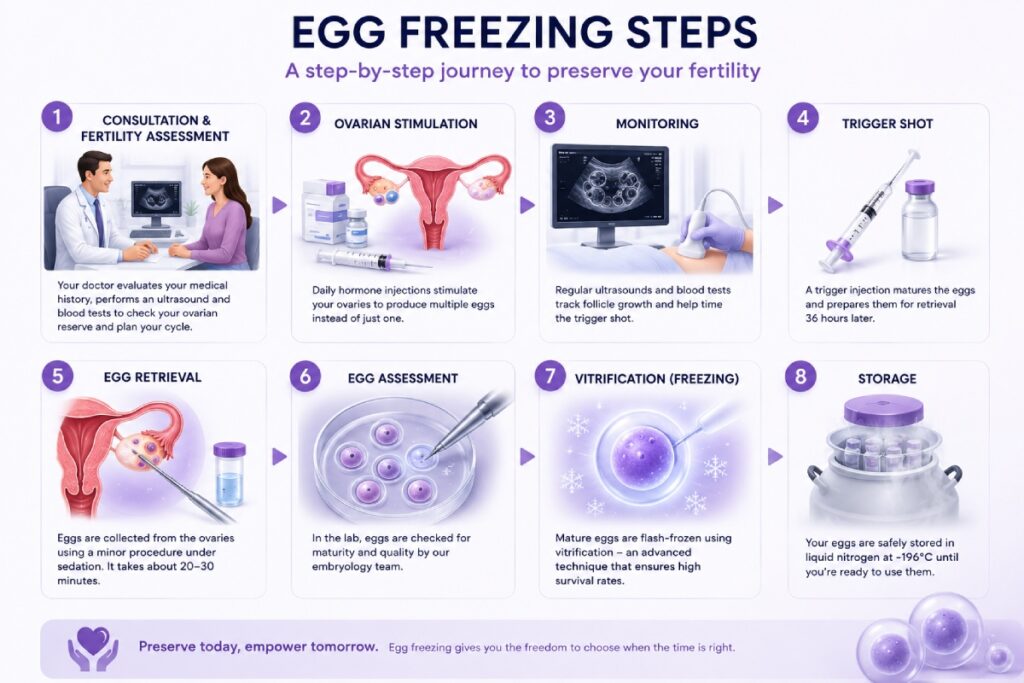
Deciding to freeze your eggs is one of the most proactive choices you can make for your future fertility. But once the decision is made, many women are left with a very practical question: how to prepare for egg freezing, and what to do next? The process involves medical testing, hormone injections, lifestyle adjustments, and a fair amount of scheduling — and going in prepared makes it significantly less stressful and, in some cases, more likely to succeed. This guide walks you through everything to do and consider before your egg-freezing cycle begins — from your first blood test to the mindset that will carry you through two weeks of injections. For a full overview of the procedure itself, visit our complete guide to egg freezing in Beirut. Why Preparation Makes a Real Difference Egg freezing success is not simply a matter of booking a clinic and showing up. Your body’s response to ovarian stimulation — how many follicles develop, how well the eggs mature, and how many survive vitrification — is influenced by your baseline health, your stress levels, your ovarian reserve, and even your sleep. You cannot change your age or your genetics, but you can control quite a lot else. Women who prepare thoughtfully often feel more in control during the cycle and have fewer surprises along the way. Preparation also gives your specialist the information needed to personalise your protocol. A one-size-fits-all stimulation dosage does not exist; the right starting dose depends on your ovarian reserve test results, your body weight, and your prior response to hormones if you have had a previous cycle. How to Prepare for Egg Freezing, Step 1: Start With a Fertility Evaluation Before any stimulation medications are prescribed, your specialist will carry out a pre-cycle assessment. This is arguably the most important step — not just for safety, but for setting realistic expectations. A fertility evaluation typically includes three components. The AMH Blood Test Anti-Mullerian Hormone (AMH) is produced by the small follicles in your ovaries and is the best available marker of your ovarian reserve — roughly how many eggs you have left. A higher AMH generally predicts a better response to stimulation and more eggs retrieved per cycle. A low AMH does not mean egg freezing is impossible, but it does mean your expectations and medication protocol need to be calibrated accordingly. AMH can be drawn on any day of your menstrual cycle; results are usually available within a few days. Antral Follicle Count (AFC) Ultrasound A transvaginal ultrasound performed early in your cycle (typically Day 2–4) allows your specialist to count the small resting follicles in your ovaries. Each antral follicle represents a potential egg for that cycle. A high AFC is a strong indicator of good stimulation response; a low AFC prompts a more conservative approach. Combined, AMH and AFC inform the starting dose of your stimulation medications. Baseline Bloodwork and Health Screening Your pre-cycle workup also includes hormone levels (FSH, LH, estradiol on Day 2–3), a full blood count, and sometimes infectious-disease tests depending on your clinic’s protocol. These rule out contraindications and set the baseline your specialist will compare against during monitoring. When to book: ideally, schedule your fertility evaluation 4–8 weeks before you plan to start your cycle. How to Prepare for Egg Freezing, Step 2: Lifestyle Adjustments That Support Your Cycle The following changes are most evidence-supported in the 60–90 days before your egg retrieval — which aligns with the lifecycle of the follicles that will mature during stimulation. Diet and Nutrition No single “fertility diet” has been proven to increase egg count, but a nutrient-dense eating pattern supports your body during the hormonal demands of stimulation. Focus on: Antioxidant-rich foods — colourful vegetables, berries, nuts, and legumes Healthy fats — olive oil, avocado, oily fish (rich in omega-3s) Lean protein — eggs, chicken, lentils, fish Adequate hydration — especially important during stimulation when your ovaries enlarge Supplements: many specialists recommend folic acid (400–800 mcg/day). Some also suggest CoQ10 for egg quality support, particularly for women over 35. Always confirm any supplements with your doctor before starting. Exercise Moderate, regular exercise — walking, swimming, yoga, light cycling — is encouraged before and during stimulation. Avoid high-intensity training and heavy lifting once injections begin: enlarged ovaries are at risk of torsion, and vigorous movement increases that risk. Sleep and Stress Both poor sleep and chronic high stress affect cortisol levels, which in turn influence reproductive hormones. Build in enough rest and downtime that you are not running on empty when your cycle starts. Many women find it helpful to plan their cycle during a quieter period at work or socially. What to Avoid During Stimulation Alcohol — best avoided entirely during stimulation Smoking and tobacco — known to reduce egg quality and ovarian response NSAIDs (ibuprofen, aspirin) unless specifically approved by your specialist Hot tubs, saunas, and very hot baths — elevated core temperature is best avoided when ovaries are enlarged Unprotected intercourse during stimulation — multiple mature follicles create a real risk of multiple pregnancy if ovulation occurs before retrieval How to Prepare for Egg Freezing, Step 3: Understand Your Medications Before You Start Egg-freezing stimulation involves daily hormone injections over approximately 10–12 days. Most women self-inject — the needles are small and your clinic’s team will walk you through the technique. The main medication types: FSH injections (gonadotrophins): stimulate multiple follicles to grow simultaneously. Common brands: Gonal-F, Puregon, Menopur. GnRH antagonist: prevents premature ovulation. Typically started a few days into stimulation. Trigger shot (hCG or GnRH agonist): administered approximately 36 hours before retrieval to trigger final egg maturation. Common side effects include mild bloating, pelvic discomfort, mood changes, and breast tenderness. Serious complications are rare but include Ovarian Hyperstimulation Syndrome (OHSS), which is monitored closely via ultrasound check-ins. Do not skip monitoring appointments — they are how your specialist ensures your response is on track and adjusts dosing in real time. Step 4: Plan the Practical Side of Egg Freezing A
Egg Freezing Success Rates by Age: What Every Woman in Lebanon Should Know

If you are thinking about freezing your eggs, one question matters more than almost any other: when should you do it? The honest answer is that timing shapes your future chances more than the clinic you choose, the medication you take, or how many cycles you complete. Egg freezing gives you a way to protect your fertility — but its power depends heavily on the age at which you press pause. This guide breaks down egg freezing success rates by age in plain language, explains how many eggs you realistically need, and walks you through what actually happens from your first consultation to the day your eggs go into storage. If you are ready to move from research to a personal plan, you can also read our full guide to egg freezing in Beirut. Why age matters more than any other factor A woman is born with all the eggs she will ever have. Over time, both the number of eggs (your ovarian reserve) and their quality decline — and quality is the part you cannot get back. Younger eggs are far more likely to be chromosomally normal, which means they are more likely to fertilize, develop into a healthy embryo, and lead to a live birth. This is the core idea behind egg freezing: by preserving your eggs at a younger age, you effectively “lock in” the biological quality of that moment. A 30-year-old who freezes her eggs and uses them at 40 is, in fertility terms, still working with 30-year-old eggs. That is why the age at freezing — not the age at which you use them — is the number that counts. Egg freezing success rates by age: the real numbers Success in egg freezing is usually measured as the chance of a live birth per egg thawed, combined with how many good-quality eggs you were able to collect. Because those two things both depend on age, your total odds change dramatically across your 20s, 30s, and early 40s. Here is a realistic guide. Under 35: the strongest window Women who freeze before age 35 typically see the highest live-birth potential per thawed egg — often in the range of 8–12% or more per mature egg. Because younger ovaries also respond better to stimulation, you tend to collect more eggs per cycle, so your cumulative odds add up quickly. Freezing 15–20 eggs in this window can translate into a strong overall chance of at least one baby. Ages 35–37: still a good time to act Fertility does not fall off a cliff at 35, but the decline becomes steeper. Per-egg success rates begin to dip and the number of eggs retrieved per cycle usually decreases. Freezing in this window is still very worthwhile — the key difference is that you may need more eggs, and sometimes more than one cycle, to reach the same level of confidence you would have had a few years earlier. 38 and over: possible, but plan carefully Egg freezing can still be effective after 38, and many women in their late 30s and early 40s freeze successfully. However, both egg quality and quantity drop more sharply, so realistic expectations matter. At this stage, your specialist may recommend multiple cycles to bank enough eggs, and will give you an honest, personalised estimate rather than a generic promise. The most important message: if you are over 38 and considering egg freezing, do not wait — every month counts. The takeaway: the earlier you freeze, the fewer eggs you need and the higher your per-egg odds. Age is the one variable you can act on today. How many eggs should you freeze? There is no single magic number, but the goal is to bank enough mature eggs to give yourself a meaningful chance of at least one live birth — and ideally more than one child if that is your hope. As a general guide: Under 35: roughly 10–15 mature eggs often gives a good chance of one baby. 35–37: aim higher — closer to 15–20 eggs, as per-egg success is lower. 38+: you may need 20 or more, frequently across multiple cycles. Remember that not every egg retrieved will be mature, not every mature egg survives thawing, not every thawed egg fertilises, and not every embryo implants. This is exactly why banking a healthy cushion of eggs — rather than the bare minimum — protects your future options. It’s not just your age — testing your ovarian reserve Age tells you the average picture, but every woman is different. Two 34-year-olds can have very different ovarian reserves. That is why a proper fertility evaluation before freezing is so valuable. Two simple tests give a clear snapshot: AMH blood test (Anti-Müllerian Hormone): estimates how many eggs you have remaining. Antral follicle count (AFC): an ultrasound that counts the resting follicles in your ovaries. Together, these help predict how well you will respond to stimulation and how many eggs a cycle is likely to yield — which is essential for setting realistic expectations and deciding whether one cycle will be enough. The egg freezing timeline: from consultation to storage One of the most common surprises is how fast the process actually is. A single egg-freezing cycle typically takes about 2 to 4 weeks from the start of stimulation, or roughly 4 to 6 weeks including your initial workup. Here is the journey step by step: Initial consultation and testing (Week 0). You meet your fertility specialist, review your goals, and complete AMH, ultrasound, and baseline bloodwork. Ovarian stimulation (about 10–12 days). Daily hormone injections encourage your ovaries to mature multiple eggs at once instead of the single egg of a natural cycle. Monitoring. Several short ultrasound and blood-test visits track how your follicles are growing so the dose can be fine-tuned. Trigger shot and egg retrieval. A final injection matures the eggs, and about 36 hours later they are collected in a short procedure under light sedation — usually 15–20 minutes, with most women resting
Egg Freezing Procedure : Preserve Your Fertility with Confidence
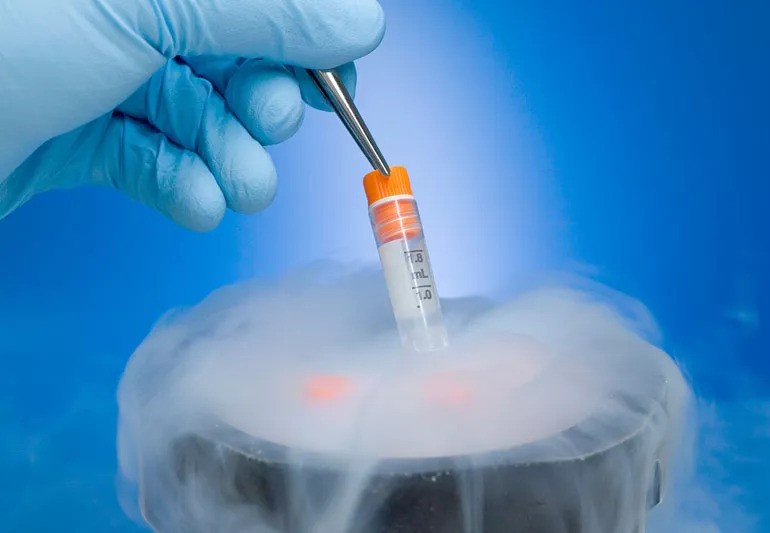
Egg freezing, also known as oocyte cryopreservation, has become a game-changer in the world of reproductive health. With more women prioritizing career goals, education, or simply choosing to delay parenthood, this technology offers an empowering solution to preserve fertility for the future. Beirut has positioned itself as a growing hub for advanced fertility treatments, attracting patients from the Middle East and beyond. Among the top providers in the region is Dr. Alain Daher, a renowned specialist who offers comprehensive egg freezing services tailored to each woman’s unique needs. In this article, we’ll cover everything you need to know about egg freezing in Beirut, answer frequently asked questions, and provide insights to help you make an informed decision. Whether you’re exploring this option as a safety net or considering it as part of your fertility journey, we’ve got you covered. What Is Egg Freezing and How Does It Work? Egg freezing involves extracting, freezing, and storing a woman’s eggs for future use. The process ensures that eggs remain healthy, regardless of a woman’s age when they are thawed and fertilized. Below is an overview of the step-by-step process: Initial Consultation: The journey begins with a fertility consultation to assess overall reproductive health and hormone levels. Ovarian Stimulation: Patients undergo hormonal injections for about 10-14 days to stimulate egg production. Egg Retrieval: Using ultrasound-guided technology, eggs are carefully extracted in a minimally invasive procedure. Cryopreservation: The retrieved eggs are frozen using a process called vitrification, which prevents ice crystals from forming. Storage: Eggs remain stored safely until the woman is ready to use them for IVF. Why Is Egg Freezing Becoming Popular in Beirut? Several factors contribute to the growing popularity of egg freezing in Beirut: State-of-the-art facilities: Clinics in Beirut use the latest technology in cryopreservation, ensuring the highest success rates. Affordable costs: Compared to countries in Europe and the U.S., fertility services in Beirut are more affordable without compromising on quality. Expert care by specialists: Professionals like Dr. Alain Daher provide personalized care, offering women clarity and support throughout the process. Medical tourism hub: Beirut is attracting women from across the Middle East due to its reputation for high-quality healthcare. Who Should Consider Egg Freezing? Egg freezing is a suitable option for women in a variety of circumstances: Career-Focused Women: Women who want to delay childbearing without compromising fertility. Medical Conditions: Those undergoing treatments such as chemotherapy that might affect fertility. Early Ovarian Aging: Women diagnosed with diminished ovarian reserve at a young age. Uncertain Family Plans: Individuals who haven’t found the right partner but want to preserve the chance of future motherhood. What Is Egg Freezing and How Does It Work? Egg freezing involves extracting, freezing, and storing a woman’s eggs for future use. The process ensures that eggs remain healthy, regardless of a woman’s age when they are thawed and fertilized. Below is an overview of the step-by-step process: Initial Consultation: The journey begins with a fertility consultation to assess overall reproductive health and hormone levels. Ovarian Stimulation: Patients undergo hormonal injections for about 10-14 days to stimulate egg production. Egg Retrieval: Using ultrasound-guided technology, eggs are carefully extracted in a minimally invasive procedure. Cryopreservation: The retrieved eggs are frozen using a process called vitrification, which prevents ice crystals from forming. Storage: Eggs remain stored safely until the woman is ready to use them for IVF. Why Is Egg Freezing Becoming Popular in Beirut? Several factors contribute to the growing popularity of egg freezing in Beirut: State-of-the-art facilities: Clinics in Beirut use the latest technology in cryopreservation, ensuring the highest success rates. Affordable costs: Compared to countries in Europe and the U.S., fertility services in Beirut are more affordable without compromising on quality. Expert care by specialists: Professionals like Dr. Alain Daher provide personalized care, offering women clarity and support throughout the process. Medical tourism hub: Beirut is attracting women from across the Middle East due to its reputation for high-quality healthcare. Who Should Consider Egg Freezing? Egg freezing is a suitable option for women in a variety of circumstances: Career-Focused Women: Women who want to delay childbearing without compromising fertility. Medical Conditions: Those undergoing treatments such as chemotherapy that might affect fertility. Early Ovarian Aging: Women diagnosed with diminished ovarian reserve at a young age. Uncertain Family Plans: Individuals who haven’t found the right partner but want to preserve the chance of future motherhood.. Common Questions About Egg Freezing 1. What Is the Ideal Age to Freeze Eggs? It’s recommended to freeze eggs before the age of 35 when egg quality and quantity are still optimal. However, the procedure can still be effective for women in their late 30s and early 40s. 2. How Many Eggs Should Be Frozen? Experts suggest freezing 10-20 eggs to increase the chances of a successful pregnancy. The number of eggs retrieved depends on the individual’s response to ovarian stimulation. 3. What Are the Costs Involved? In Beirut, the cost of egg freezing varies but typically ranges from $3,500 to $6,000, including medication, retrieval, and storage fees. Financing options or payment plans may also be available through clinics. 4. Are There Any Risks? While egg freezing is generally safe, there are minor risks, such as ovarian hyperstimulation syndrome (OHSS) or discomfort following egg retrieval. Clinics, including those led by Dr. Alain Daher, take preventive steps to minimize risks. 5. How Long Can Eggs Be Stored? Eggs can remain frozen indefinitely. Advances in vitrification techniques have shown no deterioration in egg quality over time, giving women the freedom to use them when they are ready. What Makes Dr. Alain Daher’s Clinic Stand Out? Choosing the right provider is crucial to a successful egg-freezing journey. Dr. Alain Daher is a leading fertility expert in Beirut known for: Personalized fertility plans: Each treatment is tailored based on the patient’s medical history and goals. Advanced technology: The clinic uses cutting-edge techniques, ensuring high survival and fertilization rates for thawed eggs. Supportive care: From the first consultation to follow-up care, patients receive comprehensive
